
News
Osimhen to Juventus: The clause Blocking the transfer

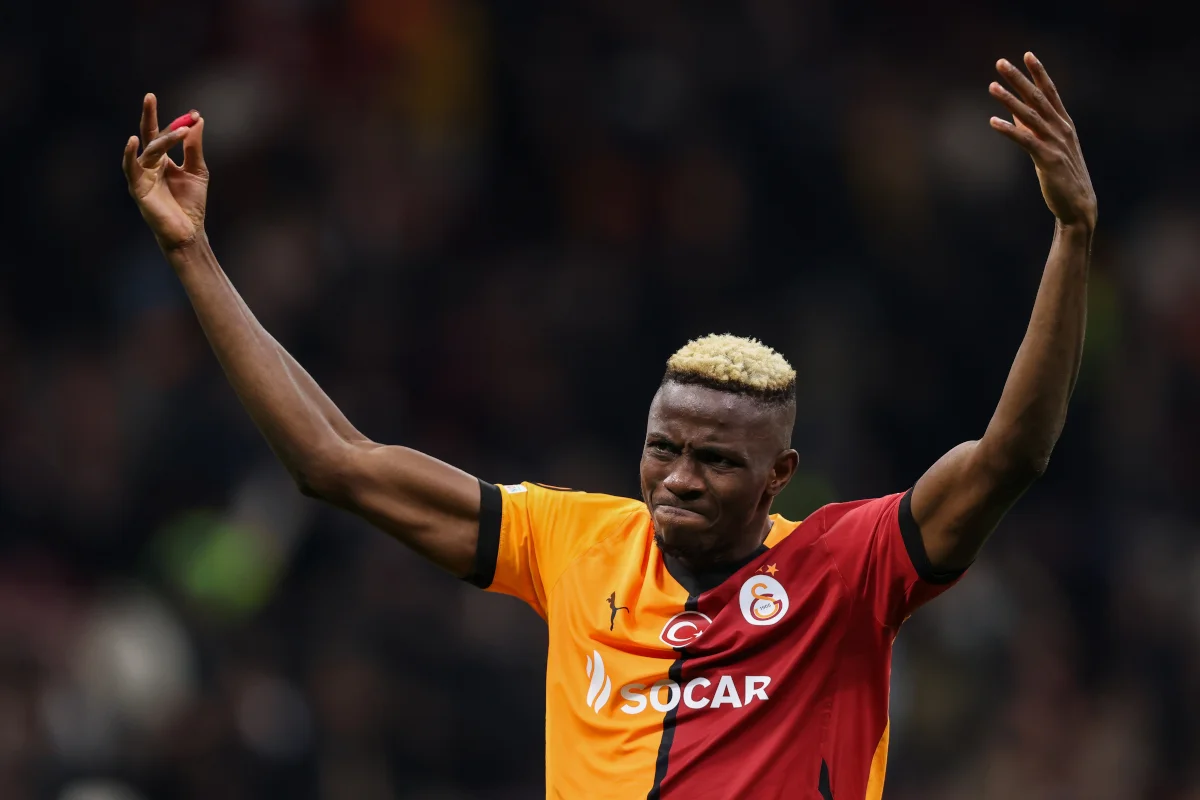
The prospect of seeing Victor Osimhen in Juventus’ iconic black-and-white shirt once seemed like an exciting possibility for many supporters.
The Nigerian striker, currently playing for Galatasaray, has long been admired in Turin for his explosive pace, physical dominance, and clinical finishing.

However, what initially appeared to be a tempting market opportunity is, in reality, blocked by a significant financial barrier.
According to TuttoJuve, the main obstacle stems from a specific contractual clause inserted by SSC Napoli during Osimhen’s €75 million summer transfer to Galatasaray.

Napoli president Aurelio De Laurentiis reportedly ensured that the deal included a strict “anti-Italy” penalty clause designed to protect the club’s interests.
The Anti-Italy Clause That Changes Everything

The clause is clear and financially daunting. If Galatasaray were to sell Osimhen to a Serie A club within the next 24 months, the Turkish side would be required to pay Napoli an additional €70 million penalty.
In practical terms, this effectively shuts the door on any return to Italy before September 1, 2027.

Such a mechanism was strategically designed to prevent a direct or indirect reinforcement of domestic rivals. For a club like Juventus, this creates a massive structural barrier before negotiations could even begin.
A Theoretical Loophole – But at What Cost?
There may be a theoretical grey area. Juventus could attempt to negotiate directly with Napoli to reach a separate financial arrangement. Yet even if that hurdle were somehow cleared, the numbers involved remain staggering.

Osimhen currently earns a fixed salary of €15 million per season, with performance-related bonuses pushing his net income up to €21 million annually.
Without the fiscal advantages previously granted under Italy’s “Decreto Crescita,” no Serie A club is realistically positioned to absorb such an investment for a single player.
For now, the dream of Osimhen in Turin appears financially unsustainable. As TuttoJuve highlights, ambition alone is not enough—modern football economics often dictate reality far more than desire.
About The Author


Osimhen to Juventus: The clause Blocking the transfer
The prospect of seeing Victor Osimhen in Juventus’ iconic black-and-white shirt once seemed like an exciting possibility for many supporters....


Juventus has this offer for Vlahovic renewal
According to Corriere dello Sport, the name that could reshape Juventus’ immediate future is Dusan Vlahovic. After a three-month absence...


Juventus strongly on Wolves midfielder
Juventus are already laying the groundwork for next season, and one name has reportedly emerged as a serious target: Andre....


Joao Mario happy at Bologna, Juventus set price
Joao Mario new chapter at Bologna FC 1909 has begun under very different circumstances compared to his previous spell with...


Alisson Becker main candidate to replace Di Gregorio
“Call them opportunities, if you like.” That phrase perfectly captures the mood surrounding Juventus as the club prepares for what...


Victor Osimhen OPEN the door to Juventus
Victor Osimhen has once again found himself at the center of transfer speculation — and this time, his own words...


Cambiaso for sale, Juve set HIGH price
A key figure in the tactical setup at Juventus, Italian full-back Andrea Cambiaso has quietly but firmly established himself as...


Juventus vs Galatasaray | Expected Lineup
Galatasaray enter the second leg of their UEFA Champions League play-off tie with a commanding advantage after an emphatic 5–2...


Juventus has 3 names to replace Di Gregorio
There will not be endless chances to prove his worth. Against Galatasaray, the emotional stakes will be sky-high and the...


Juventus and Napoli battle for Dutch winger
Italian football journalist Nicolò Schira has revealed an emerging transfer battle involving two Serie A giants and one of Europe’s...
-

 News1 year ago
EXCLUSIVE : Tonali – Douglas Luiz swap deal
-

 News1 year ago
BREAKING : Giuntoli has meet Zidane in Turin
-

 News12 months ago
Official : Paul Pogba return today
-

 News1 year ago
Ronaldo: “I had given my word to Juventus …”
-

 News1 year ago
Exclusive : Mercato recap and summer targets
-

 News12 months ago
EXCLUSIVE : Thiago Motta future in doubt
-

 Match Center1 year ago
Giuntoli & Motta talks after Torino’s match
-

 News1 year ago
Cambiaso & Tomori, special observers