
News
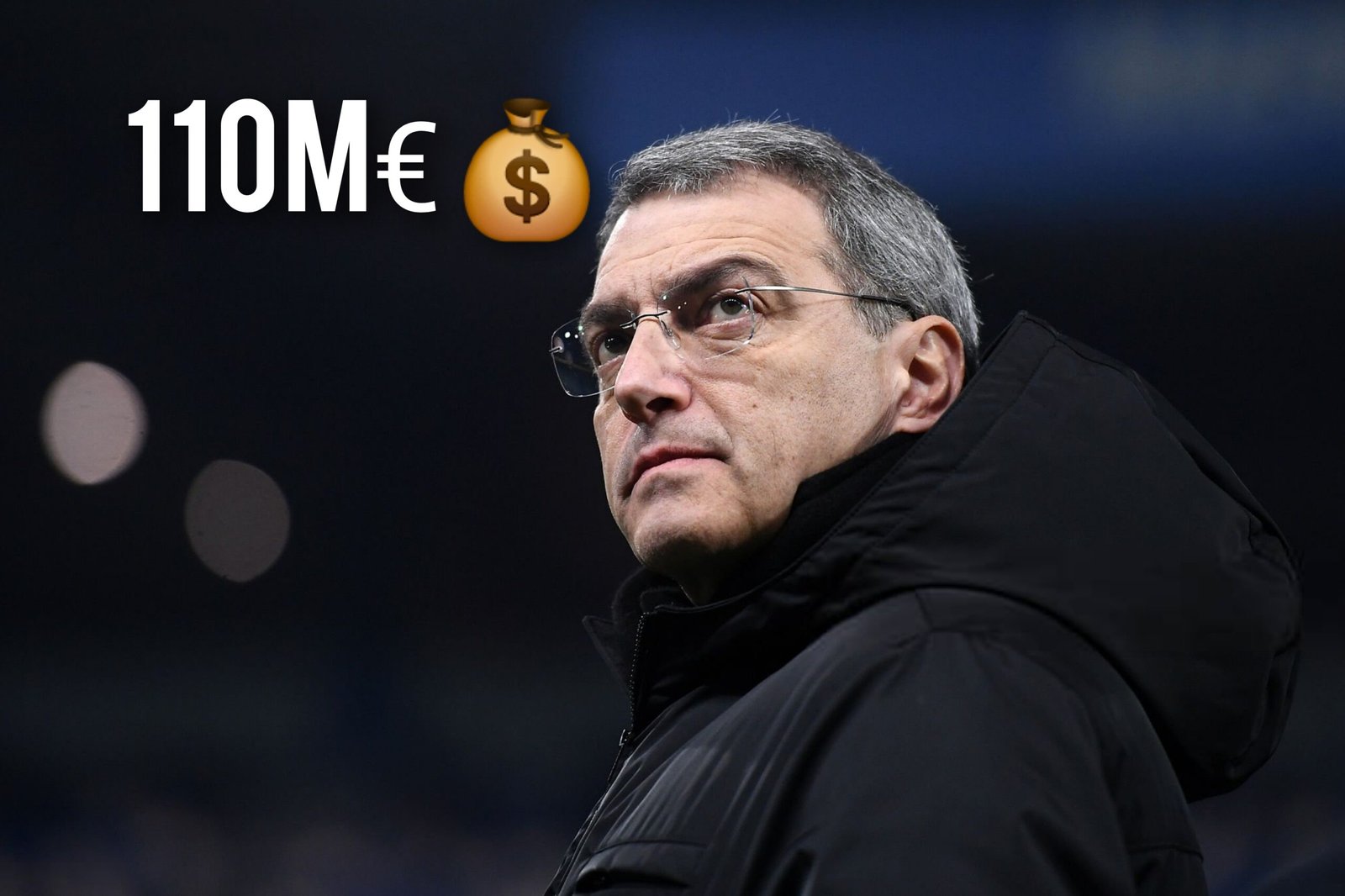
Juventus targets €110M from the sales

Even with or without the Champions League, every club’s transfer strategy—Italian or European—is bound to change drastically.
This explains why, after just a few early-season matches, Juventus decided to exceed its business plan, part ways with Igor Tudor, and entrust the team to the experienced guidance of Luciano Spalletti, with talks of a contract renewal already underway, according to Calciomercato.
Financial Strategy and the Cost of the Juventus Squad

Securing a 4th-place finish will determine the budget available to sporting director Damien Comilli, club icons like Giorgio Chiellini, and managers Modesto and Ottolini.
Regardless of qualification, however, the club will need to execute smart outgoing transfers to satisfy Spalletti. These sales must not only generate revenue and capital gains but also reduce the club’s “squad cost” on the balance sheet.

The squad cost combines the club’s total wage expenditure with the annual amortization of player transfer fees. Currently, Juventus’ squad cost sits around €315 million.
Maintaining compliance with UEFA and FIGC rules—which require the squad cost to remain below 70% of revenue—will be critical.
Who Could Leave and Spalletti’s Wishlist
Spalletti envisions a major squad revolution, targeting at least six key signings: a reliable ball-playing goalkeeper, a left-footed center-back, two full-backs, an experienced midfielder, and a central striker.

Decisions on potential buyouts or extensions for Emil Holm and Jeremie Boga will also play a role.
Lois Openda, in particular, will officially trigger a mandatory purchase, making him the first on the list of potential departures, which could expand to eight players.

Openda will be virtually impossible to sell this summer. His cost jumps from €3.3 million for the loan to a total €44 million including the obligatory purchase. With a net salary of €4 million (gross €7.4 million), the annual impact rises from €10.7 million to €18.4 million. Juventus hopes to loan him out to a club covering his full salary, freeing up €18.4 million in budget space.

Edon Zhegrova and Jonathan David, both recent arrivals from Lille, also weigh heavily on the balance sheet—€2.9 million and €2.5 million in annual amortization, respectively, with total annual costs of €21.1 million including wages.
Other returning players, including Rugani, Arthur, Nico Gonzalez, and Joao Mario, must be strategically managed to reduce their combined annual impact of €34.5 million.

Additionally, Spalletti sees players like Di Gregorio, Perin, Koopmeiners, and Kostic as expendable, potentially saving €34.2 million annually.
The €110 Million Target
Juventus’ management will need to execute this plan carefully to free up the budget for Spalletti’s transfer targets. If successful, the club could save up to €110 million annually in combined wages and amortization, not including the €41 million associated with Dusan Vlahovic leaving and the increase for Kenan Yildiz from €3 million to €14 million.

By balancing strategic sales with targeted acquisitions, Juventus aims to rebuild a squad capable of meeting Spalletti’s ambitious vision while maintaining financial compliance, according to Calciomercato.
About The Author


Juventus targets €110M from the sales
Even with or without the Champions League, every club’s transfer strategy—Italian or European—is bound to change drastically. This explains why,...


New contacts Juventus – Bernardo Silva, the latest
According to reports from La Gazzetta dello Sport, Juventus are closely monitoring the situation of Bernardo Silva, who could become...


Spalletti has asked to sell 4 players
Juventus could be preparing for another summer of significant changes as head coach Luciano Spalletti reportedly evaluates his squad ahead...


Lyon move for David, Juve set conditions for the sale
Juventus are currently facing a curious tactical paradox that is increasingly troubling head coach Luciano Spalletti. According to a recent...


Spalletti wants Nico Gonzalez return
Changes in coaching staff often bring shifts in strategy and player evaluations, and Juventus is experiencing a situation like this...


Balzarini: Juventus priority for the summer is …
Gianni Balzarini recently discussed the transfer situation surrounding Randal Kolo Muani on his YouTube channel, highlighting renewed interest from Juventus...


Juve offer Di Gregorio on swap deal to Fiorentina
Juventus have often turned to Fiorentina when searching for reinforcements, and history shows that several high-profile players have made the...


PSG set Kolo Muani price for this summer
Randal Kolo Muani’s spell at Tottenham Hotspur has not gone as planned, and his future already appears uncertain. The French...


Juventus move for Totenham left-back
Juventus are keeping a close eye on Tottenham Hotspur full-back Djed Spence as they continue planning for the upcoming summer...


Filip Kostic has found his new club
Filip Kostic’s future at Juventus appears increasingly uncertain, and the Serbian winger could soon find himself at the center of...
-

 News1 year ago
EXCLUSIVE : Tonali – Douglas Luiz swap deal
-

 News1 year ago
BREAKING : Giuntoli has meet Zidane in Turin
-

 News1 year ago
Official : Paul Pogba return today
-

 News1 year ago
Ronaldo: “I had given my word to Juventus …”
-

 News1 year ago
Exclusive : Mercato recap and summer targets
-

 News1 year ago
EXCLUSIVE : Thiago Motta future in doubt
-

 Match Center1 year ago
Giuntoli & Motta talks after Torino’s match
-

 News1 year ago
Cambiaso & Tomori, special observers